
Korea has more to offer than just K-pop and K-dramas. Behind the glitz and glamour of the massive global entertainment industry are some of the most unique dog breeds in the world.
When most people think ‘Korean dog breeds,’ the Jindo dog first comes to mind. But in reality, there are more amazing dog breeds indigenous to the “Land of the Morning Calm.” Many of which, you’ve never even heard of.
Despite the country’s unfathomable tradition of consuming dog meat, the data tells us this trend is fading. What’s even more promising is the increasing rate of dog ownership in the country.
All signs point to one fact: Koreans are finally bringing dogs into the the comfort of their homes and treating them as friends. Here are seven amazing Korean dogs that you need to know about today.
RECOMMENDED: 21 Exotic Indian Dog Breeds
Table of Contents
Dog Breeds of Korea
Although Korea doesn’t have as many native dog breeds as their neighboring Asian countries. Korean dog breeds include the Jindo, Korean Mastiff, Sapsali, Jeju Dog, Nureongi, Donggyeongi and Pungsan Dog.
Several of these breeds are facing extinction. However, organizations all around the country are battling to save and preserve these dogs.
7. Korean (Dosa) Mastiff
Highlights: Friendly, Good-natured, Dominant.
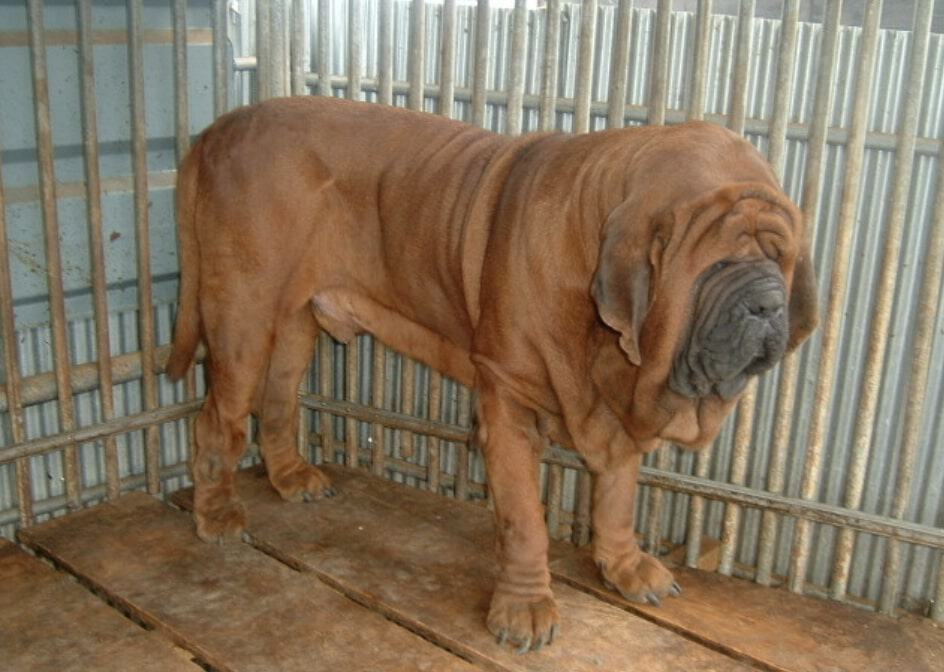
The Korean Mastiff, also known as the Korean Dosa or Mee Kyun Dosa, is easily the largest dog breed from Korea. Capable of reaching up to 185 pounds, this dog may seem intimidating and frightening.
However, the Korean Mastiff breaks the “mold” and is not like any other mastiff breeds. They are truly sweet-natured dogs, bred for companionship and as show pets.
Their skin resembles that of a Bully Kutta or English Mastiff – loosely covering the body, head and neck. The coat is short, but extremely smooth with a shiny gloss to it. The colors on these dogs are simply beautiful. They can come in a reddish mahogany or a deep brown chocolate.
The Dosa can be traced back to the late 1800’s, when they were first bred. Unfortunately, historians and researchers don’t seem to know exactly how the Korean Mastiffs came into existence. Some speculate they were developed by crossbreeding various working dog breeds that arrived from Europe.
These imports included the Saint Bernard, English Mastiff, Dogue de Bordeaux among many others. However, the most common belief is that the Japanese Tosa were crossed with the Neapolitan Mastiff and Dogue de Bordeaux.
- The Korean Mastiff is the distant cousin of the Tosa Inu (Japanese breed).
- These “beauty dogs” were initially bred with selections based solely on appearance and temperament, which is why they’re such great show dogs.
- The most expensive dog ever imported into India was a Korean Mastiff – worth 10 million Indian Rupees ($140,000 USD).
Korean Mastiff Temperament
Unlike the Japanese Mastiff (Tosa Inu), the Korean Mastiff is good natured, easy-going and loves being with people. The most difficult part about keeping a Korean Dosa is obedience training.
They will try to assume the responsibility of pack leader because of their inherent instinct to form a pack hierarchy.
You must establish dominance in your training sessions, with a clear objective of achieving pack leader status. Failure to do so can prove to be troublesome , especially with a dog as big as the Dosa.
The Korean Mastiff is what owners call a “gentle giant” – and for good reason! These dogs are extremely friendly towards people and run in a majestic manner.
They’re generally reserved with unfamiliar people, but can open up quite easily. Despite their size, they’re great around children and can get along with other dogs. These dogs are what you call a “giant lap dog.”
6. Sapsali
Highlights: Docile, Patient, Affectionate.
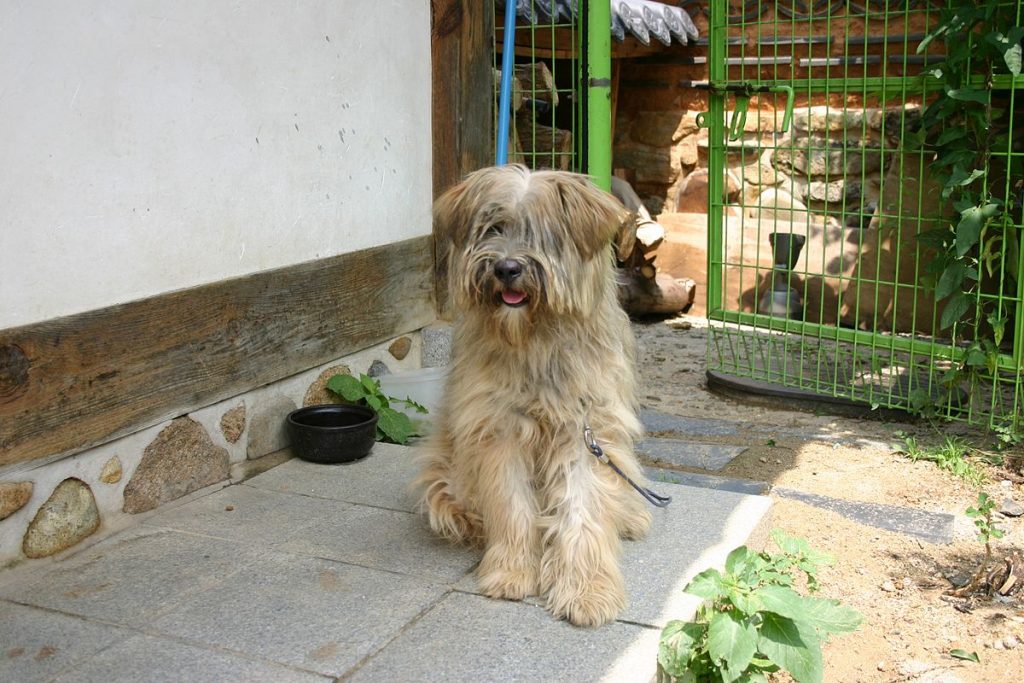
The Sapsali dog is a native Korean breed most known for its long and shaggy coat, resembling that of a small lion cub. In fact, locals often refer to them as “lion dogs” due to their looks.
For a medium sized dog, the Sapsali is somewhat bulky and tall with hair covering its eyes – similar to the Old English Sheepdog. Their coat color is not as consistent as other dog breeds. For example, they can come in gold, brown, red, grey, black or a mixture.
In 1992, the Korean government declared the Sapsali dog as a National Treasure of the country. Unfortunately, this indigenous Korean dog has not been officially recognized by any major organizations.
They were popular dogs during the rule of the Silla Kingdom and usually kept by only aristocrats. The noblemen admired the Sapsali so much that they even enrolled these dogs into the Silla military.
- After the Japanese slaughtered the Sapsali dogs, the Korean breed was revived using only the 8 remaining dogs.
- The Japanese slaughtered these dogs to make coats for their military troops residing in Manchuria.
- The Sapsali were thought to have the power to repel evil spirits and ghosts.
Sapsali Temperament
Upon first impression, this dog looks like a docile and pleasant dog – and that is exactly right. The Sapsali is one of the most gentle and playful breeds among all the Korean dogs.
They’re known for having outstanding patience and having innate friendliness towards humans and animals alike. It’s a big reason why these dogs make such excellent family and companion dogs.
They are social and can be extremely playful in a group of dogs or humans. Owners describe the Sapsali dog as loyal dogs that do what they can to please their owners.
It’s safe to say they get along great with children, other pets and strangers. As a result, they may not be the most ideal guard or watch dogs. Consider a Jindo dog instead.
5. Nureongi
Highlights: Calm, Friendly, Sociable.
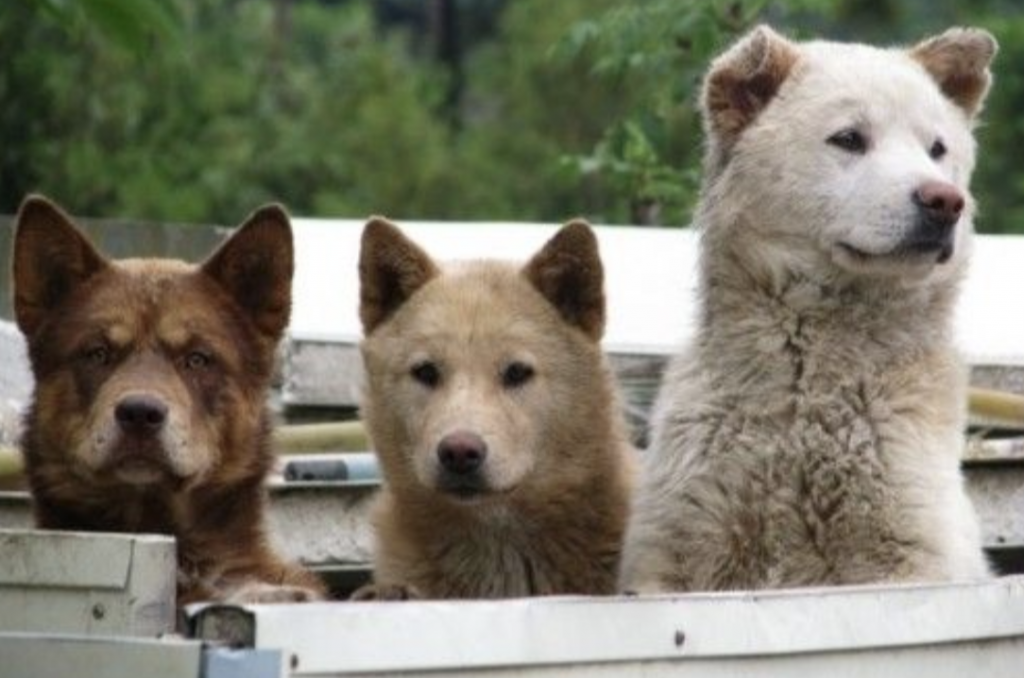
The Nureongi, otherwise known as the Korean Yellow Spitz, is a landrace breed native to Korea. As a medium-sized spitz, the Nureongi is eerily similar to the Jindo dog. However, they do have differences in physical appearance and characteristics.
For example, this dog breed has a short coat with patches of yellow. Most Nureongi dogs also have a melanistic mask, which is essentially a pattern on the coat that gives the appearance of the dog wearing a mask.
Korea has a long standing tradition of consuming dog meat, known as “Gaegogi,” which dates back to the ancient times of the first century AD.
The most unfortunate part is that the Nureongi is reported to be the most popular choice of dog for Koreans to consume. Animal activists are actively fighting this practice and we hope the black market of dog consumption will end soon enough.
- The Nureongi is the only landrace breed in Korea. This means they were developed over time without the interference of humans.
- The Nureongi is the “dog of choice” for consumption in Korea, unfortunately.
- They are the oldest Korean dog breed that has been officially recorded, dating back to the 1st Century AD.
Nureongi Dog Temperament
The Nureongi dog is a fairly vocal breed – in other words, they love to bark. Many people describe them as excessive barkers because of their strong desire to communicate with humans and other dogs.
On the flip side, they are smart dog breeds and not known to be aggressive towards humans or other dogs. Many of these dogs spend their whole lives in a kennel and even then, it’s rare to see dog fights occur.
But because of their unfortunately circumstance, there just isn’t a lot of information and data on how they interact in a family environment. Hopefully, this will change in the near future.
4. Jindo Dog
Highlights: Courageous, Loyal, Energetic.
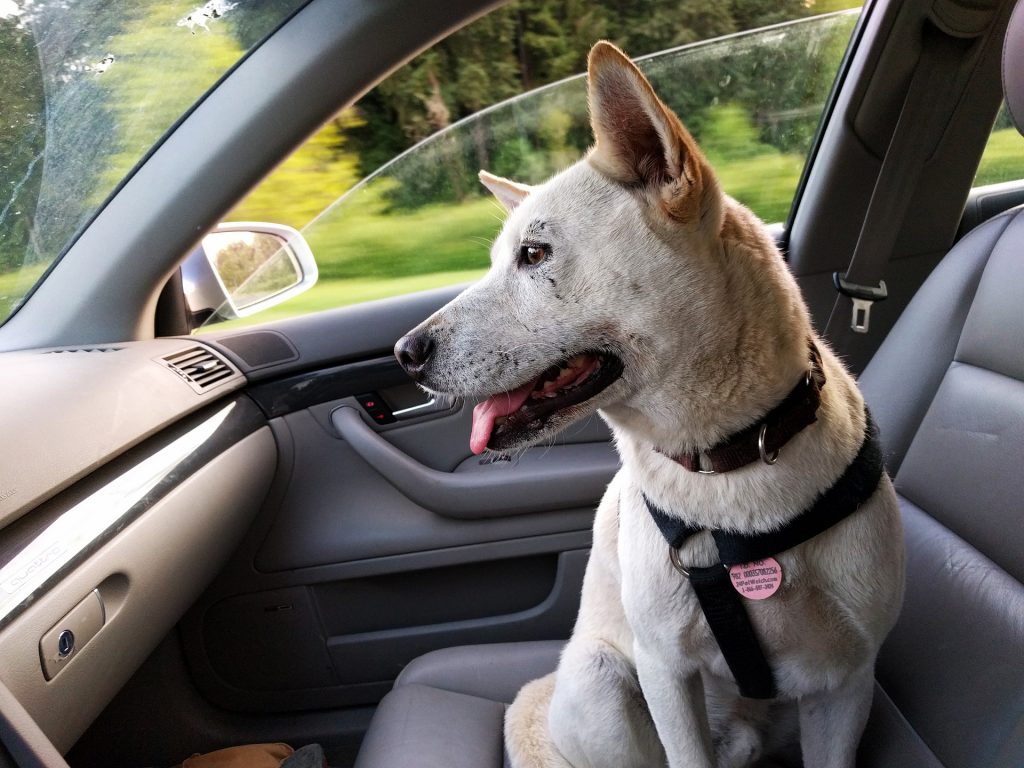
The Korean Jindo is probably the most famous breed to originate from Korea, as they’re the first Korean breed most people think of.
In fact, they’re the national dog breed of Korea. But the real reason why they’re so popular is because they’re just that great of a dog.
Indigenous to the Jindo Island of Korea, the Jindo dog is a formidable hunting dog known for loyalty and courage. But throughout the years, they’ve also been excellent family and guard dogs.
Legend has it that three Jindos took down a single Siberian tiger. Whether this is true remains to be seen. We’d like to believe it’s true!
Much effort has been put into training them to be capable military dogs for the Korean army. However, they’re not as suited as German Shepherds because of their strong hunting instincts.
Experts believe that they are much better off as search and rescue dogs, where they have been thriving. The Jindo Dog is the only Korean dog breed to be recognized by the Korean Kennel Federation.
- The Korean Jindo is celebrated as the national dog breed of South Korea and the 53rd National Treasure of the country.
- During the 1988 Summer Olympics held in Seoul, Korea, over a hundred Jindo dogs marched in the opening ceremony.
- Jindo dogs are known to be afraid of water, often refusing to cross flowing river streams and venturing out into the rain.
Jindo Temperament
A big part of why the Korean Jindo dogs make such excellent hunting companions is because of their braveness and courageousness. They’re also known for having unwavering loyalty towards their owners.
Although they’re often high in energy, they can be as gentle as any other breed. With enough socialization, they will get along with people and children just fine. It’s no surprise why they’ve become the most popular family dog to come from Korea.
The Korean Jindo is an extremely intelligent breed. As a matter of fact, many owners claim that their dog may be too smart for its own good. Often, thinking for themselves.
However, this just means they need a lot of mental and physical stimulation for healthy living. They require plenty of exercise and enough space to roam around freely.
3. Donggyeongi
Highlights: Friendly, Devoted, Dependable.
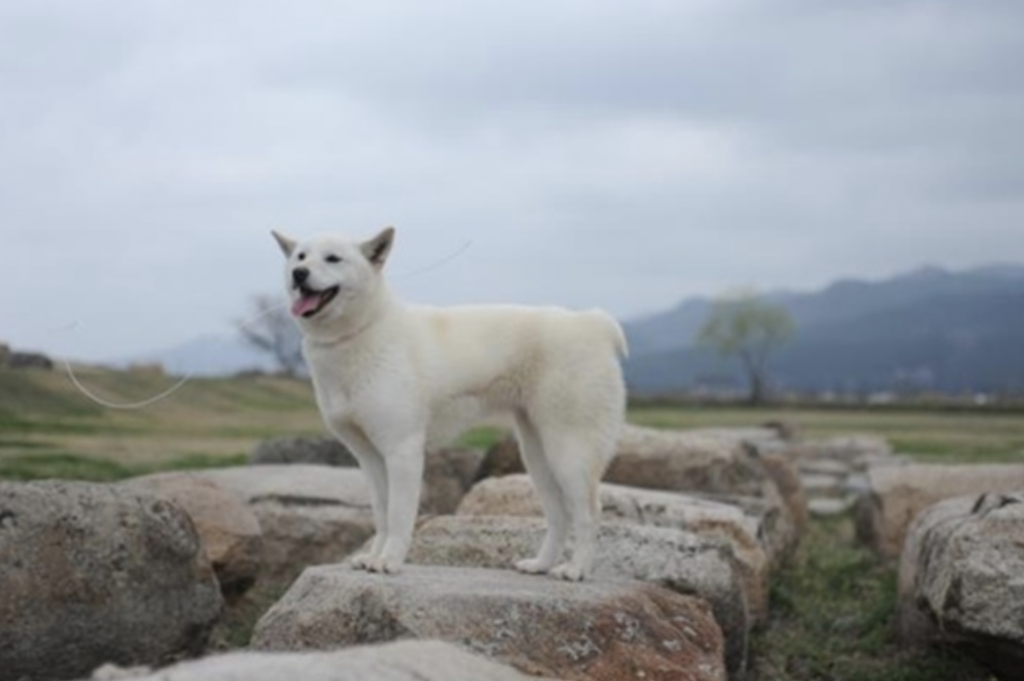
The Donggyeongi dog is a rare Korean breed most notable for their bob-tail feature. They were named after the coastal city they originated from – Gyeongju, Korea. Physically, they look very similar to the Jindo dog, except for the exceptionally short-tail.
At one point, they were relatively popular dogs and locals made great efforts to preserve them due to their national characteristics. By the time of the early 20th century (1900’s), the Japanese invaded Korea and slaughtered this dog breed.
The Japanese intruders believed that these dogs closely resembled the Japanese Komainu, which somehow offended them. The Donggyeongi couldn’t quite fully recover after this massacre. It was brutal and unfortunate.
After the National Liberation Day of Korea in 1945, the Donggyeongi dogs faced even more hardship. Their short tails were viewed as a deformation and thought to bring bad luck. For this reason, breeders stopped breeding these dogs and owners stopped raising them.
- The Donggyeongi is one of only 34 dog breeds that are naturally born with a bobtail.
- Koreans believed that the short bobtails were an indication of bad luck, which severely hindered the breed’s survival.
- When the Donggyeongi became a national treasure in 2012, there were only 460 of these dogs left in South Korea.
Donggyeongi Temperament
This breed is so rare that there isn’t much information on the temperament and personality of Donggyeongi dogs.
However, some netizens speculate that they are friendly and loyal dogs, which is why they were once great family dogs. Their sizable frame make them potentially excellent guard dogs.
2. Pungsan dog
Highlights: Lively, Dominant, Stubborn.
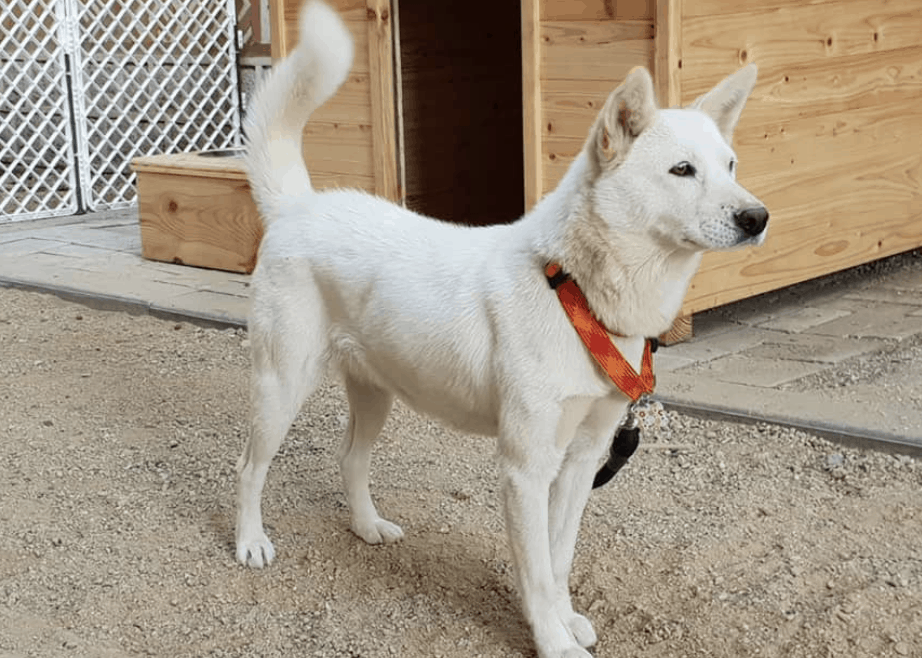
Unlike the other Korean dog breeds on this list, the Pungsan dog is the only one to have originated from North Korea. They were skilled hunting dogs bred in the Kaema Plateau of North Korea, where elevation reached 2,000 meters high.
To this day, the Pungsan is still considered a relatively rare dog breed and found mostly in North Korea and Northeastern regions of China.
Most people recognize the Pungsan dog as the official national dog of the Hermit Kingdom. What the Korean Jindo is to South Korea, the Pungsan dog is to North Korea.
Multiple times in our history, the leader of North Korea has gifted these dogs to other nations as a peace offering or present. For example, at the Inter-Korean Summit of 2000, Kim Jong-il (North Korean Leader) gave two Pungsan dogs to Kim Dae-jung (South Korean President).
These dogs lived in the South Korean President’s Blue House for many years before retiring at the Seoul Zoo. Eventually, they were honored with the special status as “guests of the state.“
- At the Inter-Korean Summit of September 2018, North Korean Leader Kim Jong-Un gifted the South Korean President two white Pungsan dogs as a peace offering.
- Many people believe that the Pungsan is the result of wolves mating with dogs in the mountainous regions of Kaema highlands.
- Local Folklore has a famous story about a Pungsan dog that took down a Siberian Tiger.
Pungsan Temperament
Many owners describe the Korean Pungsan as “wolf-like” with a dominant personality and high prey drive. They are full of energy and have the tendency to try to establish dominance quickly over other animals (including humans).
With that said, these dogs are not easy to care for and recommended only for the most experienced trainers. Not only will obedience training be tough, but they require a minimum of two hours of physical activity per day.
Many Pungsan dogs like to dig holes in the yard as a method of expending energy. But, make sure your yard is safely secured, as they will try to escape. If they ever get out, it’ll be very difficult to track them down and bring them home.
Early socialization is key to getting them to play nice with humans and children. As long as you’re consistent with training, they should have no problem in the future and can even become great guardians. If you want a reliable alpha dog, the Pungsan dog is perfect.
1. Jeju Dog
Highlights: Loyal, Agile, Protective.
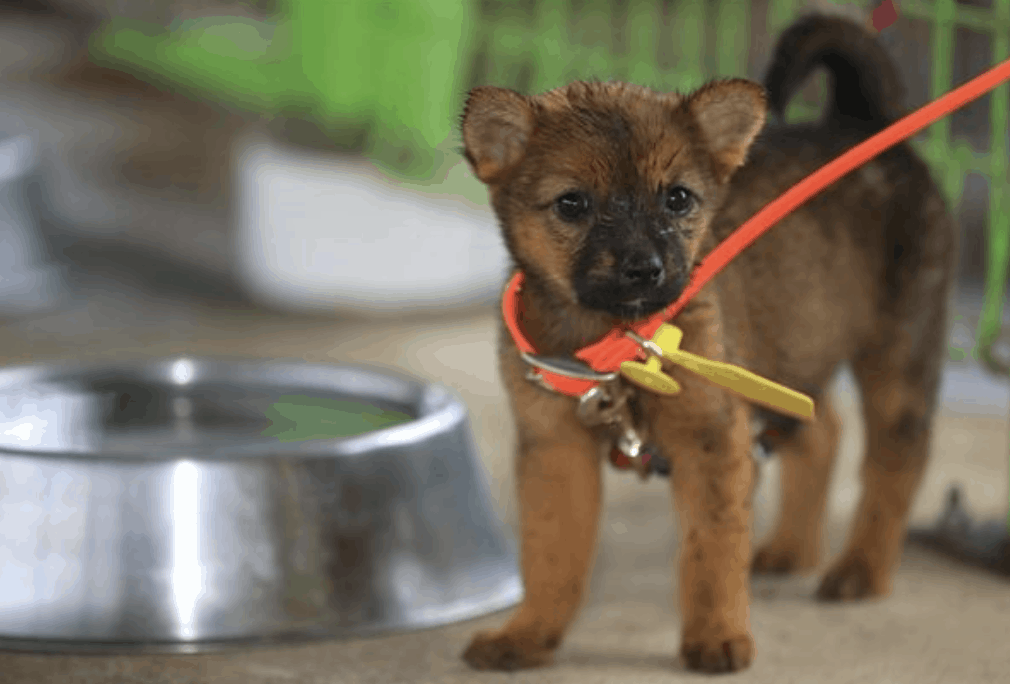
The Jeju dogs got their name from the island off the southern coast of Korea, Jeju Island – where they were originally bred. They’re considered to be one of the largest native Korean dogs and share many characteristics with the Korean Jindo.
The main difference is their wide and pointy foreheads. Many believe the female Jejus look like foxes, whereas the male Jejus look like wolves. Both of which, are badass comparisons.
They are perhaps the rarest breed to originate from South Korea, with only 69 purebreds in existence as of 2010. At one point, they were on the brink of extinction before an aggressive breeding campaign brought them back from the dead, almost literally.
However, it wasn’t until 2010 that these dogs earned the distinction of “national heritage animals,” which brought them great protection with the goal of preservation.
There are many reasons why these dogs faded so quickly. At one point, they became one of the most consumed dog breeds in Korea, along with the Nureongi dog. Plus, the Japanese that colonized Korea and slaughtered their dogs certainly didn’t help either.
- The Jeju dog breed was revived from the only 3 remaining dogs found on Jeju Island in 1986.
- It’s believed that this dog breed came to Jeju Island over 3,000 years ago. However, historians aren’t certain how they actually got there.
- These dogs were once used in the South Korean military for various jobs, including search and rescue.
Jeju Dog Temperament
Jeju dogs are famously known for their loyalty, making them some of the best guard dogs you can find. Not only can they protect your home, but they’re extremely skilled hunters as well.
Many hunters in the past brought along a Jeju as a trusted hunting companion. Their incredible sense of smell allows them to easily track animals. Jeju dogs have been known to take down deers, badgers and other medium-size game.
These dogs can make great family dogs because they do it all. They’re great with family, will guard territory and protect their owners. However, they’re difficult to train and should be reserved for experienced owners.
They’re also difficult when playing with other dogs and animals, even with socialization training at an early age. Make sure you keep them in a one-dog household.
Korean Dog Meat Controversy
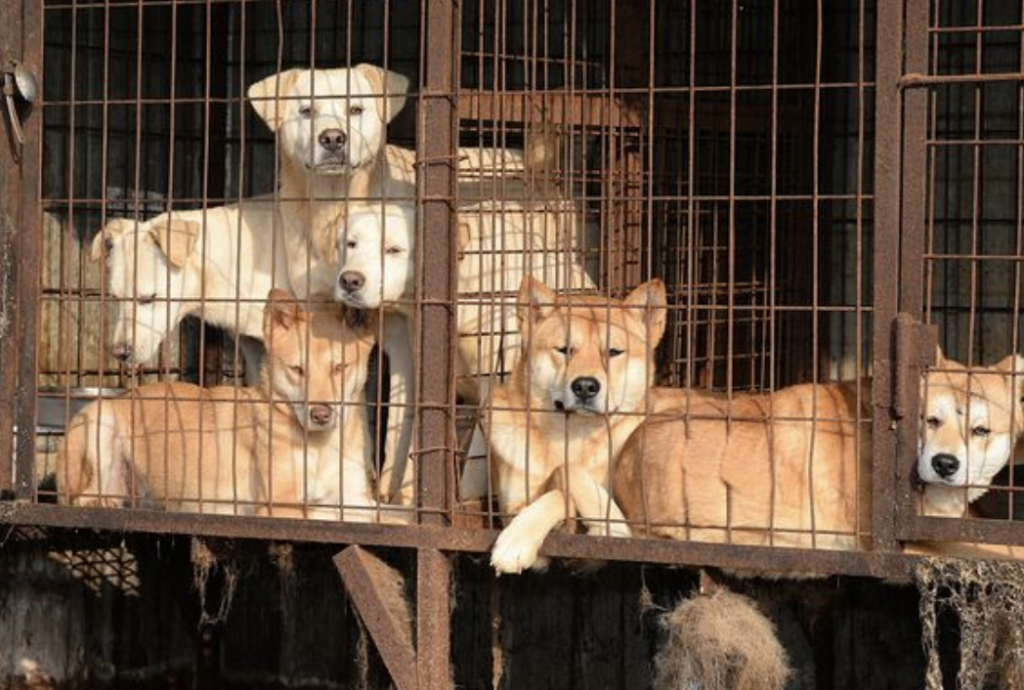
One of the biggest controversies in South Korea has been the consumption of dog meat. This unfathomable “delicacy” is called “Gaegogi” (개고기), which literally translates to “dog meat.”
Unfortunately, this is one of the longest standing traditions in Korean culture and dates back to the first century AD, during the Three Kingdoms Era.
At the time of writing, selling dog meat for consumption is not fully illegal in South Korea, but the inhumane method of slaughtering them is protected by Animal Protection Right – Article 7.
As a result, the topic of outright banning the whole dog meat trade industry has been a hot topic in recent years.
Currently, there are still thousands of dog farms operating all over the country. It’s no surprise this has garnered the attention of the largest animal rights groups in the world. Some of which, include: the ASPCA, PETA and the Korean Animal Welfare Association.
However, the opposing Korean Dog Meat Association is frequently challenging any efforts made by animal rights organizations.
The Korean government understands the negative stigma and scrutiny from international countries. Nonetheless, they fail to take action as quickly as we hope.
During the 1988 Summer Olympics held in Seoul, the government urged citizens to cease consumption of dog meat to improve the country’s image to visitors. They understand it’s frowned upon, which is a good first step.
Dog Meat Trend in South Korea
As disgusted as you may feel, there is good news. The demand for dog meat is rapidly falling as more Koreans adopt the mindset of dogs being friends, not food. Dog farms are starting to close down as business decline.
The US-based Humane Society International (HSI) is making the decision easier for farmers, offering compensation to shut down their business. In fact, 10 different farms have shut down in the span of three years. Slowly, but surely.
A 56-year old farmer, with 170 dogs at his Namyangju farm, explains:
This business is doomed…I wanted to exit before it’s too late. Price of dog meat has plummeted in recent years.
According to a Korean Survey, 70 percent of the population do not and will not eat dog. However, only 40% believe that dog consumption should be outright banned. Still, these numbers are much better than they were in the past.
In 2018, a court ruling made headlines when the South Korean city, Bucheon, ruled that killing dogs for meat is illegal. Although this is just one city, the landmark decision could potentially pave way for a country-wide outlaw.
Help End the Dog Meat Trade
There are still a million dogs consumed each year in South Korea, and even more in neighboring Asian countries.
Although were far away from an international ban, South Korea is a great first step. If you truly want to help, there are ways to contribute to the cause.
1. Educate Yourself
To learn more about the cause and how you can help, i’d suggest visiting the Humane Society International.
They’re the frontrunner for this amazing cause and provide up-to-date information on dog meat trade in countries all over the world.
2. Take Action
Knowledge is power, but there are other ways of contributing. The Humane Society International (HSI) accepts donations that go directly towards this cause.
If money is short, feel free to sign their petition to stop dog meat trade. For those that want a more hands-on way of helping, they often have volunteer opportunities as well.
3. Rescue Korean Farm Dogs
As more and more farms close down, the remaining dogs are left without a home. After experiencing brutal living conditions, these dogs are fragile – both mentally and physically.
They need to slowly adjust to the “normal” environment of a loving family. There are several organizations that bring these dogs back to the US and Canada for adoption.
If you feel like this is your calling, visit Free Korean Dogs, Soi Dog and Korean K9 Rescue.
Note from the Author:
If you’ve made it this far, thank you for listening / reading. I wanted this to be an amazing resource for learning about Korean dogs, but also as an outlet to talk about a cause that means so much to me. There’s a reason they’re called a man’s best friend.
Dogs are probably the most selfless creatures in the world, given as a gift to man. Their unconditional love is one of the best things I have ever experienced.
The fact that they’re treated the way they are is appalling and should be stopped. If you feel the same way, I hope you find a need to contribute to the cause.
Even something as small as signing the petition will draw awareness. If you want to learn about an equally important cause happening across the world, check out the bottom segment regarding Mexican stray dogs.
Thank you again, for listening and sharing.
Posts you may like:
- 16 Best Asian Dog Breeds
- 15 Interesting Italian Dog Breeds
- 57 Hypoallergenic Dog Breeds
- 9 Captivating Canadian Dog Breeds
- 21 Radiant Russian Dog Breeds
- 5 Festive Mexican Dog Breeds
- 28 Elegant English Dog Breeds
- 12 Best Spanish Dog Breeds
- 24 Fancy French Dog Breeds
- 40 Stunning German Dog Breeds
- 21 Charming Chinese Dog Breeds
Jazz
Tuesday 15th of September 2020
Nice article however I don't get why mentioning kpop was necessary. Correlation is nowhere found.
Semi
Monday 21st of September 2020
You do know that the "k" in k-pop stands for "korean," right? This article is about KOREAN dog breeds...lol if you still don't understand the correlation than you can't be helped
Jay Lin
Saturday 25th of January 2020
@Yoonmi Kim: THANK you so much for your well-informed, nuanced, thoughtful response. The level of ignorant, paternalistic Rudyard Kipling-style condescension in this article and comments is unreal. Or rather, it’s far too real, I just wasn’t expecting to stumble into it on a random Saturday morning while googling small dog breeds.
I’ve never eaten dog either and likely never will, since I live in the US. But the fact is, there is no genuine biological or ethical distinction between what’s a food animal and what’s a pet animal. And it’s also a fact that judging and policing other cultures’ food choices has long been a part of Western colonialism. (Well, all colonialism, but Western colonialism is the one still impacting us today.) Your food traditions aren’t superior, you’ve just been subconsciously conditioned into believing everyone else is primitive savages who need to be enlightened.
Owen Cutting
Monday 28th of October 2019
My name is Owen and currently own a Pungsan male, his name is Simba. I'm so in love with Simba, he's intelligent,stubborn, and will attempt to control me if allowed. He's loving and tries very hard to communicate with the family via head gestures and eye movement. We have nothing but praise for this breed. Simba is now 11yrs turning 12 in December 2019. Looking to get another Pungsan. Article was very informative about the various breeds of Korea. AKC doesn't recognize the Pungsan breed, and I would like to change that. Any suggestions?
Richard Jeng
Monday 28th of October 2019
Thanks for the comment, Owen. This may be useful for you: https://www.akc.org/press-center/facts-and-stats/becoming-recognized/
I hope you do get the Pungsan breed registered by the AKC someday...good luck!
Yoonmi Kim
Sunday 28th of July 2019
The article says, though that Koreans "unfortunately" have been eating dogs since the first century. It's not just a Korean practice. In the first century other people were also eating dogs. It was widespread. We all are descended from dog eaters, like it or not, the question is how far removed are you? And how much did say European imperialism play a part in the more recent eating of animals you don't approve of. Guinea Pigs were long food before they were pets. The newer categorization into pets, doesn't mean they never were food and thus we should force the country that introduced us to the animal to outright quit because we reclassified them into pets.
Also, going to remind people that it was barbaric to eat your plow--which was a cow. Why would you eat the animal that gives you agriculture? How can you do that when there are Hindus in the world. And how could you eat pigs which also can eat humans, and have several cases straight up where they've been used to dispose of bodies. Pigs are considered dirty to eat in Jewish and Muslim lore. Chickens--no one cares about chickens really. Though there was that chicken that survived for years with its head cut off. (Worldwide--Chickens are usually agreed upon--BTW, from Southern India-ish area Jungle Fowl) Koreans had laws against anyone but the king eating any cow. We sanitize it in English by calling it "Beef" and "pork" so you don't see a mooing cow every time you eat the animal. Would it make people feel better if people called it chien instead? In fact, sanitize the image by packaging it, and making sure you don't ever connect the two. Keeping cows and pigs are doing a lot of damage to the environment. Why not eat bugs? Why don't other countries who do eat bugs get to judge us for not eating them? Shouldn't we considering our food habits are ruining the planet and entire economies Avocados, for example are destroying three countries right now. And I know it will make you upset, but that's more damage to human and environment that any historical eating of dogs has. But Avocados are considered acceptable, even though they are currently tanking three human economies and destroying the planet. Your latest food fad might be also destroying a country, but that's generally OK in the US as long as you don't see it.
Every culture has its own food taboos. The question isn't whether you find it disgusting, but to pause and think how much of a hand you or your ancestors had in that. How much in the past did you or your ancestors also play a role in doing the exact same thing or in current consumption today. It's easy to point fingers elsewhere, but it's much harder to think and ponder about causes and reasons why one would do something different from you right now. And the imperialism by Europe, the US and other Europe-colonized/ruled countries had a huge hand in Korea's dog consumption currently. And your sense of delicious might be impinging on someone else's religious beliefs or give them a deep sense of disgust. So, if you want to change cultural practice... you need to understand why the people are doing it, own your own history of it and past in making the people currently do it, and find better alternatives. Otherwise it's mostly paternalistic jingoistic white imperialism of another kind and we've seen how far that's gotten everyone. (Wars in Africa... Middle East, destabilizing of much of Asia towards communism, genocide... you have to own your own hand before you can change something) Argentina also eats dog... but white focus is on Koreans mainly, because OMG Olympics, also maybe white guilt over the fact they produced this from the Korean War. (Koreans had a hand too, but imperialism from both sides made it a whole lot worse)
I can turn it around, too. From a Korean perspective, not thanking the people who created your food, packaging them in tons of ocean-polluting plastic (why do Americans not separate their recycling properly, a Korean would say), and not being conscious of the animals you eat is barbaric. They gave their life for you to live. How could you work so hard to detach yourself from that very fact? Shouldn't you know where your food came from? How much food do you waste? Why not talk more about the health benefits of food and encourage people to eat food by talking about how good it is for you. Why don't English speakers think this way? Shouldn't it be widespread? I mean the US practically bankrupted Bolivia by not asking this question with its quinoa farming. We should force you to do this because what you do is barbaric not even thinking about how the plants and animals gave their life up for yours. Which humans worked hard for you. So it goes both ways. Think harder before you judge. Thinking harder doesn't mean agreeing, it's reflecting on how and why.
BTW, I don't eat dog. I'm just pointing out often European imperialism wants everything to be their way without thinking of the real consequences. Are you going to be ticked off when you can't eat beef in India? Think harder and more critically.
Dr. Woofentein
Thursday 6th of August 2020
I am a dog-lover in America, but I believe meat is meat, and if a person eats any animal for meat, it is hypocritical to say eating a different animal is immoral. Besides health or religious practice, there's nothing that makes a cow or chicken more or less viable than dog or fish, etc.
Taya
Sunday 27th of October 2019
Dogs evolution parallels ours for thousands of years. Often with more devotion to us than that which we’ve shown them. We survived with and because of them . They have defended us, guarded us , given their lives for us and mourned us . Cows and Guinea pigs not so much.. I think that gives dogs the right of exclusion from becoming a food source for us. It’s a point of human honor . I almost like your anthropology lesson though. But not completely !
jennifer
Sunday 19th of May 2019
I love the message...let the Korean dogs free!